財經與經濟 | 維生素D療法
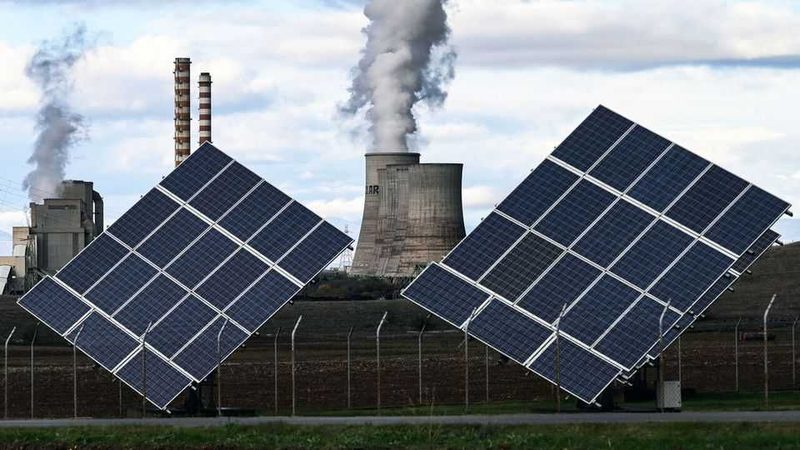
宣稱新版波斯灣戰爭的贏家是煤炭,已成一種潮流。這種黑乎乎的東西確實獲得了助力,尤其是在像印度這樣的國家,它們既擁有大量的煤礦,也大量進口液化天然氣 (LNG)。然而,霍爾木茲海峽的關閉可能反而能為清潔能源,尤其是太陽能帶來更大的發展契機。
早在美國和以色列在二月底開始轟炸伊朗之前,清潔能源的成本下跌就已經在世界許多地區削弱了化石燃料的競爭力。兩個新的報告清楚地顯示了這點。它們很可能在世界各地的能源不安全首都被仔細研讀。
4月20日,國際能源署 (IEA),一個大型石油消費國的俱樂部,發布了其年度《全球能源審查》。IEA 估計,太陽能光伏系統去年滿足了全球超過 25% 的新能量需求(包括發電和交通運輸),高於天然氣的 17%。
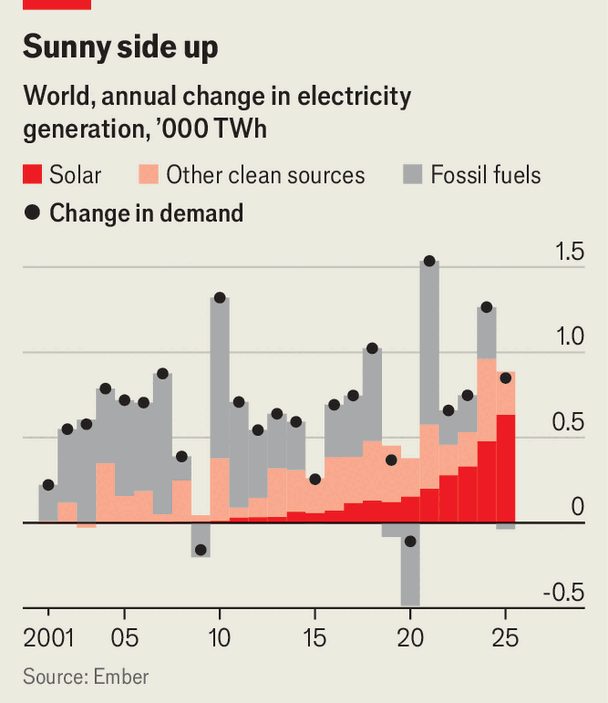
第二份報告由 Ember,一家研究機構,在隔天發布,重點關注電力市場。它也強調了一些創紀錄的成就。2025年,首次出現新再生能源發電量超過全球電力需求增長(見圖)。而且,在一個多世紀以來首次,再生能源在全球範圍內產生的電力(34%)超過了煤炭(33%)。
大部分增長來自太陽能發電量的激增,從 2,143 到 2,778 太瓦時 (TWh) 增加了 30%。新安裝的發電容量幾乎佔了所有增長。風力發電從 2,510TWh 上升到 2,715TWh。連同水力、地熱和一些其他技術,再生能源產生了近 11,000TWh 的電力,佔去去年全球總量的 34%。本世紀以來,化石燃料產生的電力首次少於前一年。
太陽能價格正在下跌。太陽能發電的「平準化」成本,結合了資本和運營成本(但未考慮再生能源間歇性所造成的「系統成本」),自 2010 年以來已下降約 90%。它現在甚至低於印度燃煤發電的成本,即使你加上了儲電系統。陸上風力發電更便宜。
如果低成本和低碳還不足以成為賣點,那麼像目前正在發生的能源危機就提供了另一個理由。在一個碎片化的世界中,清潔能源提供了一定的能源安全。一旦安裝好,太陽能板和風力渦輪機就能運作,不受地緣政治動盪的影響,儘管會受到天氣的影響。
在 2022 年俄羅斯入侵烏克蘭之後,德國早先的清潔能源投資為其節省了 250 億歐元($260 億美元),大致相當於其先前幾年燃氣的年度進口費用。更引人注目的是,去年新增的太陽能發電量超過了 2025 年波斯灣出口的所有 LNG 燃燒所產生的電力。目前因天然氣供應短缺而受苦的國家,特別是亞洲的國家,會將這個數據銘記在心。■
如欲了解更多關於經濟、金融和市場中最大事件的專家分析,請訂閱我們的每週訂閱者專屬電子報 Money Talks。
這篇文章由 zlibrary 從 https://www.economist.com//finance-and-economics/2026/04/23/renewables-are-shining-the-iran-war-amplifies-their-appeal 下載。
\n\nRenewables are shining. The Iran war amplifies their appeal.
\n\nFor decades, the promise of renewable energy has been hampered by the perception that it is too expensive and unreliable. But the war in Iran has dramatically altered the calculus. Oil prices have spiked to $147 a barrel, making solar and wind power look far more attractive.
\n\n“The geopolitical risk premium is now baked into the price of oil,” says John Smith, an energy analyst at Goldman Sachs. “This makes renewables not just environmentally desirable, but economically competitive.”
\n\nGovernments around the world are responding. The US has announced a $50 billion investment in solar energy, while the EU is accelerating its plans to reach net-zero emissions by 2040. China, already the world’s largest investor in renewables, is doubling down on its commitment, with plans to build 100GW of new wind and solar capacity each year.
\n\nBut the transition to a renewable energy economy will not be easy. There are significant challenges to overcome, including the intermittency of solar and wind power, the need for better energy storage solutions, and the lack of skilled workers.
\n\n“We need to invest in grid infrastructure and battery technology,” says Jane Doe, CEO of Tesla. “And we need to train a new generation of engineers and technicians to build and maintain these systems.”
\n\nDespite these challenges, the future of renewable energy looks bright. The Iran war has provided a powerful catalyst for change, and the momentum is now firmly on the side of clean energy.